Search Results for Darjeeling

1986 to 2026: A Common Citizen’s Plea for Darjeeling

The current balanced political alignment offers a rare, historic window of opportunity. But as a community, we must refuse to be bought off with the crumbs of the past. We have lived through the experiments of the Darjeeling Gorkha Hill Council and the Gorkhaland Territorial Administration frail, administrative bodies that served as nothing more than temporary bandages on a deep, historical wound. We do not want another compromise designed to buy temporary peace; we want a constitutional guarantee designed to deliver permanent justice.


Beyond Planting Trees: Restoring Native Forest and Freshwater Ecosystems In Darjeeling Himalaya

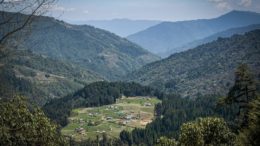
Prior to the colonial period, large areas of the lower and middle elevations, specifically in Darjeeling were covered by extensive subtropical and temperate broad-leaf forests that formed a continuous ecological network across the hills. During British rule, the landscape underwent a profound transformation as forests were cleared to establish tea plantations, settlements, roads, and other infrastructure. These changes shaped the economic and cultural identity of the region and continue to influence the landscape today. However, they also resulted in the fragmentation and loss of vast tracts of native forest ecosystems.

What remain today are often isolated patches of native vegetation embedded within tea estates, agricultural lands, village forests, and human settlements. Though fragmented, these remnants represent some of the last surviving examples of ecosystems that once dominated the Darjeeling Himalaya.

Restoring ecosystems is not only about conservation; it is also about people.

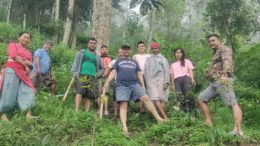
Healthy native forests support a wide range of non-timber forest products (NTFPs) that contribute to rural livelihoods and cultural traditions. Seasonal collection of fiddle-head ferns (ningro), wild mushrooms, bamboo products, wild edible fruits, fodder resources, and medicinal and aromatic plants has long formed an important part of life in the Darjeeling-Sikkim Himalaya. These resources provide food, nutrition, traditional medicines, and supplementary income for many households while helping preserve traditional ecological knowledge passed down through generations.


Siliguri District and The Hollowing Out of Darjeeling – Beware

The Terai is not a foreign appendage attached to the hills; it is part of the same human geography. Phansidewa and Bagdogra have substantial Nepali-speaking populations whose families have lived there for  generations, and the tea-garden workforce of the Terai is overwhelmingly Adivasi and Gorkha. Their political voice in district affairs has always run through hill institutions, hill parties and hill networks. Cutting off these blocks administratively is not a neutral change. It is a demographic rearrangement of political power.


Revisiting the Old Gorkha Thum Dorjeling: Then & Now The Darjeeling Odyssey – A review

In 1835, through the Deed of Grant, the EIC acquired, “…out of friendship … all the land south of the Great Rungeet River, east of the Balasan River, Kalyail and Little Rungeet Rivers, and west of the Rungus and Mahanadi Rivers”(Mainwaring 1876: viii). Besides, he has elaborated on the ‘push and pull factors’ that led to Darjeeling’s transformation, and the birth of Nepalipan and the emergence of Gorkha.


Women Football and Opportunities for Players of Darjeeling: An Exploration

The Indian National Women’s Football League team qualified for the AFC Asian Cup 2026 to be held in Australia and the under-20 team also qualified for the Asian Cup to be held in Thailand in 2026. Things have started looking brighter for the teams and there is a perceivable transformation in the landscape of the women’s football itself in India. The All India Football Federation (AIFF) is also trying to push for women football in a more sustained manner to reach and penetrate more geographical regions in India to popularise the game.


The Parsi Cemetry Darjeeling – In The Quiet Corners Of My Childhood Memories

The secret garden of my childhood still exists, though now hidden beneath wild weeds, silence and ravaged by landslide. The Parsi Cemetery at Singtom Fatak now, is nothing more than a forgotten patch of land but for many who have lived nearby for generations, this place was never just a cemetery. It was a peaceful space filled with flowers, soft light, and quiet rituals. A part of daily life we often passed by, yet never ignored wasn’t always this silent. Once upon a time, this place was more than a burial ground. It was a kind of secret garden, filled with seasonal flowers, where nature and memory lived together in quiet harmony.


Darjeeling – Queen of the Hills!!

The British discovered Darjeeling by coincidence. It was a stroke of sheer luck that the British chanced upon Darjeeling in the year 1829 and its discovery ended years of search for a Hill station in the Bengal province