Darjeeling

Sikkim Politicians and the Art of Fearmongering – Much Ado About Nothing

During the Sikkim Legislative Assembly elections of 2014, the then Chief Minister Pawan Kumar Chamling had used “Sikkim lai Gorkhaland banauncha” narrative to scare people of Sikkim to vote against SKM. That was the first time I had realized how politicians in Sikkim use “Darjeeling merger” as a tool to fear-monger people into voting for them. In almost every election after that, this narrative is raked up in Sikkim by one group of politicians or another, to serve their nefarious political purposes.

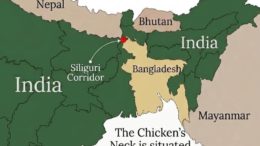
The “merger” claim also deserves a plain reply. What I find hilarious is that some in Sikkim suffer from this “Central Character Syndrome” and have taken “with contiguous areas of neighbouring states” to mean Sikkim. That’s absolutely not the case. As far as I know, securing the Chicken’s Neck by incorporating Kishanganj district of Bihar into a possible North Bengal state has been an idea national security experts have proposed many times. We don’t see people in Bihar protesting, nor people in Assam with which also West Bengal shares a border. Why is it that every time, a solution to Darjeeling is proposed, a certain section of politicians in Sikkim feels insecure? it’s because this narrative serves their political purpose and nothing else.
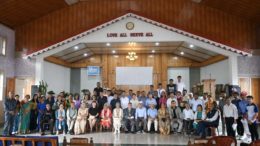

RUN WITH ROSHNI FOUNDATION CELEBRATES 15 YEARS OF EXCELLENCE

For fifteen years, Roshni Rai has worked quietly and tirelessly to build a culture of running in the hills. At a time when very few believed that a runner from this region could stand on an international podium, she came with the vision of sending Gorkha runners to Olympics.

What began as a personal passion for running grew, through her years of effort, into a movement that has given the Darjeeling-Sikkim region some of its finest marathon and trail running talent. Today as running events and running clubs have mushroomed throughout the region, credit must go to Team Run With Roshni for planting these seeds of transformation


FEVER RELATED DEATHS IN DARJEELING – Is the Government Sleeping?

In Ghoom, a young man named Karma, only 37 years old, complained of fever. By the time he reached the hospital, he was already in critical condition, and could not be saved. In Lebong, Meena Sharma, a pioneering woman footballer who had represented the country internationally in the 1970s and 80s, died of the similar fever. These are only two of the cases we are sharing here, due to paucity of space. However, many more such deaths have been reported across the hills, and in none of these cases has the health department conducted a post mortem to identify the actual virus responsible.


Siliguri Corridor: Between Strategic Necessity and Ecological Precarity

Union Home Minister Amit Shah’s statements during his recent visit to Siliguri have brought focused attention to the practical requirements of safeguarding the Siliguri Corridor. He described the Corridor as one of the most sensitive and critical zones in the country, connecting eight northeastern states to the rest of India and therefore is vital for national security. While he gave various directives correctly identifying the urgency of hardening physical control and improving inter-agency coordination, they largely remain incomplete if treated solely as a security-centric package.

An implementable policy complement would be the formal establishment of a Siliguri Corridor Integrated Management Authority (SCIMA), a statutory body under the Ministry of Home Affairs with representation from the Ministries of Defence, Environment, Forest and Climate Change, and Development of North Eastern Region, as well as the governments of West Bengal, Assam, and Bihar.


The Sherpa Ponbo of Sherpagaon: The Last Keeper of the Invisible World

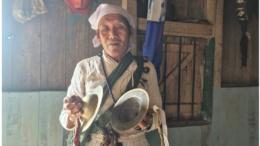
When I stepped back onto the village road, motorcycles continued to pass, children still laughed somewhere down the slope, and neighbours greeted one another before continuing home. Nothing suggested that, inside one ordinary house, sat the last practicing Ponbo of Sherpagaon, holding a lineage preserved not through books but through memory, apprenticeship, and family. Whether another Ponbo will emerge after Pemsangay Sherpa remains unknown. But one thing is certain: traditions disappear long before the last practitioner dies, when their stories are no longer remembered.


ANATOMY OF AMBITION – Power-grab attempts behind altruism?

From a purely political perspective, had Hamro Party not contested the 2022 GTA elections, it would have automatically de-legitimized the Gorkhaland Territorial Administration. With Ajoy Edwards and his merry men contesting the elections, they provided credibility to the GTA elections, that was majorly rigged by Kolkata.

In 2026, Anit Thapa has resigned as GTA Chairman, and some Sabhasad of his party BGPM have also resigned. What is interesting to note is that neither Ajoy Edwards or any of Hamro Party (which incidentally do not exist today) sabhasads have bothered to resign from GTA. There is a very good chance that Ajoy Edwards may end up becoming the GTA Chairman, thus fulfilling his long-held ambition of running the GTA (else why bother contesting an election everyone else had boycotted?).


1986 to 2026: A Common Citizen’s Plea for Darjeeling

The current balanced political alignment offers a rare, historic window of opportunity. But as a community, we must refuse to be bought off with the crumbs of the past. We have lived through the experiments of the Darjeeling Gorkha Hill Council and the Gorkhaland Territorial Administration frail, administrative bodies that served as nothing more than temporary bandages on a deep, historical wound. We do not want another compromise designed to buy temporary peace; we want a constitutional guarantee designed to deliver permanent justice.


Beyond Planting Trees: Restoring Native Forest and Freshwater Ecosystems In Darjeeling Himalaya

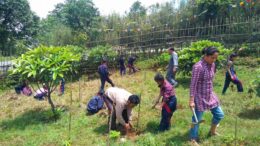
Prior to the colonial period, large areas of the lower and middle elevations, specifically in Darjeeling were covered by extensive subtropical and temperate broad-leaf forests that formed a continuous ecological network across the hills. During British rule, the landscape underwent a profound transformation as forests were cleared to establish tea plantations, settlements, roads, and other infrastructure. These changes shaped the economic and cultural identity of the region and continue to influence the landscape today. However, they also resulted in the fragmentation and loss of vast tracts of native forest ecosystems.

What remain today are often isolated patches of native vegetation embedded within tea estates, agricultural lands, village forests, and human settlements. Though fragmented, these remnants represent some of the last surviving examples of ecosystems that once dominated the Darjeeling Himalaya.

Restoring ecosystems is not only about conservation; it is also about people.

Healthy native forests support a wide range of non-timber forest products (NTFPs) that contribute to rural livelihoods and cultural traditions. Seasonal collection of fiddle-head ferns (ningro), wild mushrooms, bamboo products, wild edible fruits, fodder resources, and medicinal and aromatic plants has long formed an important part of life in the Darjeeling-Sikkim Himalaya. These resources provide food, nutrition, traditional medicines, and supplementary income for many households while helping preserve traditional ecological knowledge passed down through generations.


BJP May Not be Ready for Gorkhaland, Gorkhas Are!

Be honest to yourself, can a Gorkha ever aspire to be the Chief Minister of West Bengal? Since Independence, name one Gorkha Minister in the Central Government?

Despite being capable in every other way, Gorkhas have been sidelined politically. Which is why, this need and demand for Political autonomy exists.

BJP may think that Gorkhas are not ready for Gorkhaland, but Gorkhas know we are.


Siliguri District and The Hollowing Out of Darjeeling – Beware

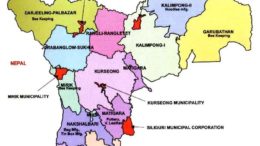
The Terai is not a foreign appendage attached to the hills; it is part of the same human geography. Phansidewa and Bagdogra have substantial Nepali-speaking populations whose families have lived there for  generations, and the tea-garden workforce of the Terai is overwhelmingly Adivasi and Gorkha. Their political voice in district affairs has always run through hill institutions, hill parties and hill networks. Cutting off these blocks administratively is not a neutral change. It is a demographic rearrangement of political power.