Search Results for Darjeeling

150 Years of Vande Mataram – A Melody That Became a Movement

November 07, 2025, marks the 150th anniversary of India’s National Song Vande Mataram, which translates to “Mother, I Bow to Thee”. This composition, an enduring anthem, has inspired countless generations of freedom fighters and nation builders, standing as a lasting emblem of India’s national identity and collective spirit.

Meet Pasang (Saurav) Tamang, the Local Talent Set to Shine in India’s U-23 Football Team

Pasang Dorjee Tamang, popularly known as Saurav Tamang, has made us proud by being selected in the Under 23 Indian National Football Team as a winger. The 21 years old lad had already been a name familiar to any football follower in the region, scoring goals through big and small tournaments across our region and beyond during his starting years in football itself. Later, his promising performance and consistency got him to be drafted to one of the oldest and the most legendary football clubs in the country – Mohun Bagan. Saurav continued to prove his mettle as a solid player match after match, scoring goal after goal.


Gorkha Hill Transport Composite Complex – A betrayal

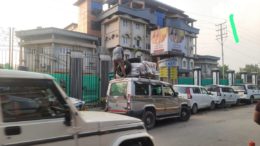
During the tenure of Subhash Ghisingh and under the Darjeeling Gorkha Hill Council (DGHC), a vision was laid out to create a Gorkha Hill Transport Composite Complex in Darjeeling More, Siliguri – a project inspired by the Sikkim Nationalised Transport Composite Complex.

The plan was to build a unified transport hub that would serve as a lifeline for the hill population, designed to benefit both local passengers and hill taxi drivers across Darjeeling.

That vision has been betrayed today


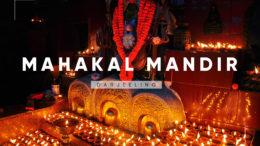
Mahakal, The Mandir I Knew

For me, being Hindu was never about rigid codes or centralized doctrines. Dara Mandir became a shared identity, a Darjeelingey or “Gorkha” way of being that embraced diversity and coexistence. I’ve met practicing Christians in Chowrasta who hold Dara Mandir in reverence, not out of religious obligation but out of respect for its place in our collective memory.


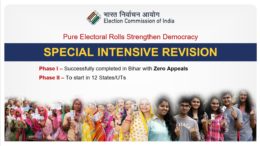
Special Intensive Revision – A basic intro

The Special Intensive Revision is a comprehensive overhaul of the electoral roll, where voter verification is done from scratch. This is different from the regular annual summary revision that accounts for new voters, deaths, and migration. The Election Commission of India (ECI) has ordered this for Bihar, and now it will be implemented in 12 states and UTs, including West Bengal.

Since 1951 to 2004, it has been done 8-times. The last SIR was done in 2002-2004.


The hills deserve better

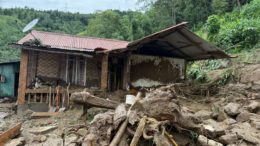
The people of the hills are yearning for genuine change, and the only weapon they possess is their vote. It is therefore imperative that we do not fall prey to the propaganda machinery that thrives on rhetoric and raw emotions. We must decide wisely, lest we spend another five years trapped in regret, lamenting unfulfilled promises and watching our backyards crumble further.


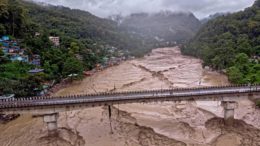
Lest We Forget – The Teesta Disaster, 4 October 2023

The October 2023 Teesta Floods and the acronym GLOF are not going to be easily erased from our memories, especially when it rains in the first week of October. Neither is the scarring of the landscape and the river flowing alongside houses, roads and highways going to heal overnight, considering very little was done for the rehabilitation of the landscape. What has faded is the much needed national and mainstream media focus on the issue and dialogue for rehabilitation and resilience building. As a region we have to ask the question, are we left to live with the impacts of the Teesta Disaster 2023 or are we going to learn from it and build back better?


Dashain Aayo

The sky is blue. The sun glows. Thin clouds scatter like kite tails unraveling in the wind. Somewhere, the voice of the weatherman drifts in. Dashain aayo.


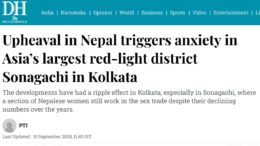
PRESS TRUST OF INDIA – Shameful Racist Take on Crisis in Nepal

Press Trust of India’s (PTI), a non-profit cooperative that caters to some of the largest publications in South Asia has done a great disservice to their readers, especially the people of Nepal. Their recent article on the ongoing upheaval in Nepal is nothing, other than a glaring example of racism that reduces a profound political crisis unfolding in an ancient nation, to a sordid sideshow in Kolkata’s Sonagachi red-light district.

Titled “Upheaval in Nepal triggers anxiety in Asia’s largest red-light district Sonagachi in Kolkata,” PTI takes a sensationalist approach. This article does nothing other than perpetuating harmful stereotypes about Nepalese women.