
How Marks Become Identity
My son passed his 10th boards.
Not with the kind of marks that make society erupt into performative applause, but with enough to preserve something infinitely more valuable — his confidence, his dignity, and his belief in himself.
And I keep thinking: What if he hadn’t?
Would a few failed papers have suddenly transformed him into a lesser human being? Less intelligent? Less worthy of love, respect, or a future? What a brutal system — one that convinces children their value can be quantified before they have even discovered who they are.
For months, children are stripped of sleep, joy, and peace in the name of “success.” Homes become factories of anxiety. Parents call it discipline; often, it is fear masquerading as ambition.
An exam can measure memory and performance under pressure. It cannot measure character, resilience, compassion, creativity, emotional depth, or the ability to build a meaningful life.
The world is filled with highly accomplished people who are emotionally bankrupt, and equally filled with ordinary students who became extraordinary human beings. So no, I refuse to believe a marksheet determines destiny. Because long after the percentages are forgotten, a child remembers one thing: whether they were loved as a human being or evaluated as a project. And no academic achievement is worth the slow destruction of a child’s spirit.
My best friend wrote this on her social media page after the ICSE Class X results were declared on Thursday, and it stayed with me long after I finished reading. It wasn’t just moving. It was unsettling in the way truth often is. The kind that lingers quietly, refusing to be brushed aside.
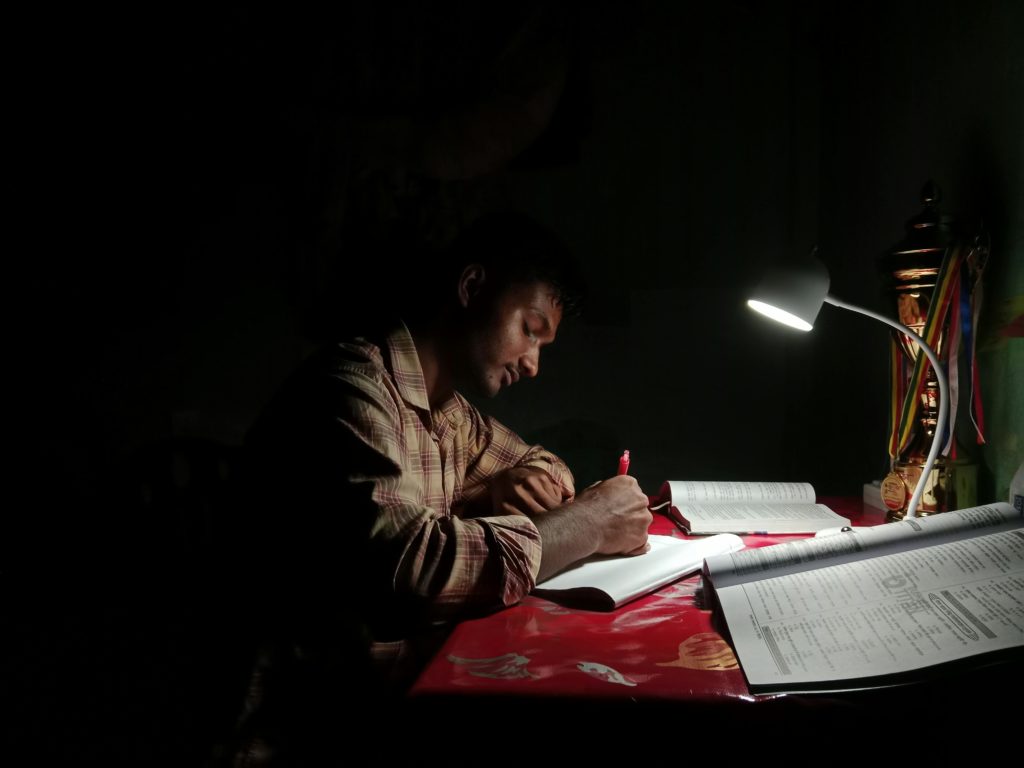
As a mother of a child preparing for her Boards next year, I find myself standing at that familiar crossroads of hope and fear. There is the quiet hope that your child will do well, of course, but alongside it runs a steady current of anxiety, tension, and that ever-present “mummy worry” that never quite switches off. It sits with you at your workplace, your home, follows you into thoughts and conversations, and lingers even in moments that are meant to feel light.
Because Board exams in our country are not just academic milestones anymore. They slowly turn into emotional battlegrounds. Not only for children, but for entire families who begin to measure time, mood, and even self-worth around a set of dates on a calendar.

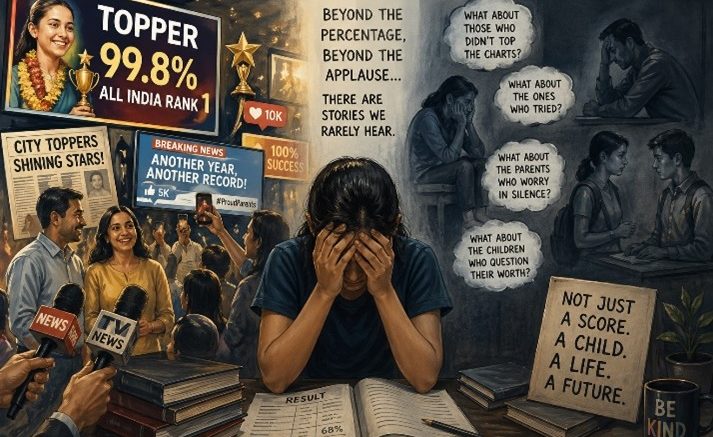
It often feels like walking a tightrope without a safety net. On one side is encouragement, on the other is pressure – and we are constantly trying to strike a balance without even knowing if we are getting it right. And all around us is noise. A relentless, almost celebratory obsession with “top scorers” flooding social media, newspapers, and television screens. Percentages flash like badges of honour. Toppers are interviewed, analysed, glorified. Success is loudly defined, repeatedly reinforced, and narrowly measured.
But in all this noise, there is a silence that feels almost deliberate.
What about those who didn’t top the charts? Those who fell short of expectations—others’ or their own? What about the average student, the one who tried quietly, consistently, but couldn’t translate effort into numbers? When did effort stop being enough?
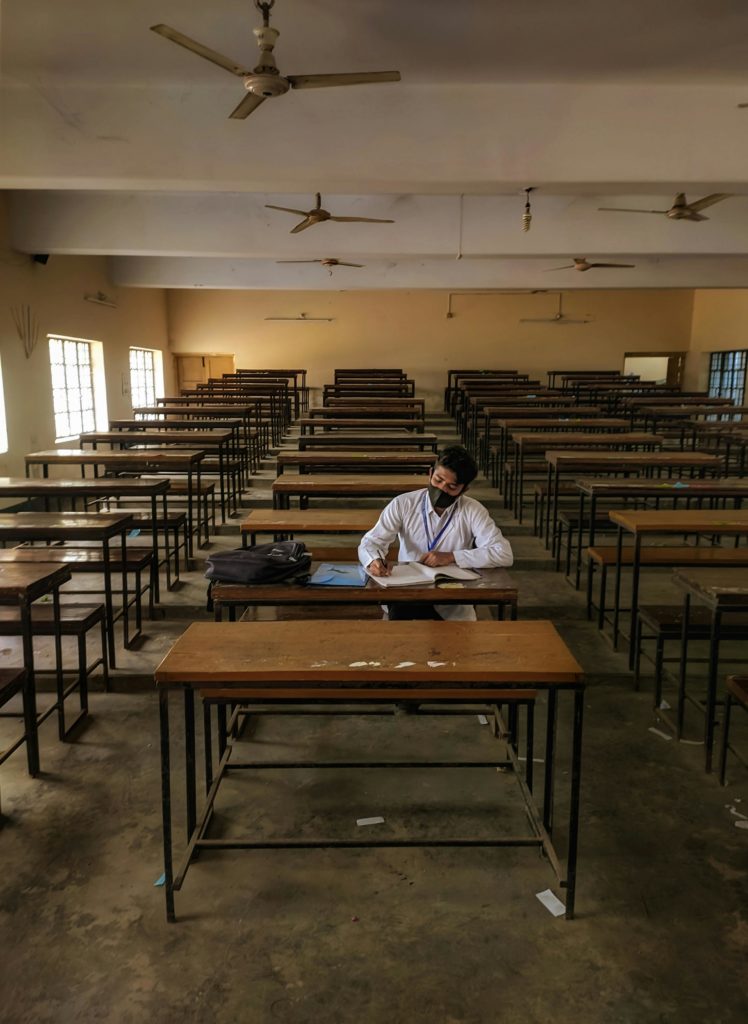
And beyond them—what about their parents and guardians, who are navigating their own quiet storms of worry, disappointment, guilt, and helplessness? The ones who replay conversations in their heads, wondering if they pushed too hard—or not enough. The ones who must choose their words carefully, because even a casual remark can either steady a child or shatter what little confidence remains.
What about the friends who don’t know whether to celebrate or console? The classrooms that will reopen with invisible lines drawn between “successful” and “not quite there”? The homes where conversations will either grow softer or heavier?
And most importantly, what about these children themselves…standing at a fragile intersection of self-worth and societal validation, trying to make sense of where they stand in a world that seems to reduce them to a number?
Perhaps the real question we need to ask ourselves is this: when did marks become a measure of a child’s worth, rather than just a reflection of a moment in time?
Because long after the percentages fade and the headlines move on, what remains is far more lasting—the confidence we build, or the doubt we quietly plant.
These are the voices we rarely hear.
And maybe, these are the ones we need to listen to the most.
(Sarikah Atreya is a senior journalist and media personality from Sikkim)


Be the first to comment on "Numbers, Noise, and the Quiet Truth"