Articles by Guest Author

Beyond Planting Trees: Restoring Native Forest and Freshwater Ecosystems In Darjeeling Himalaya

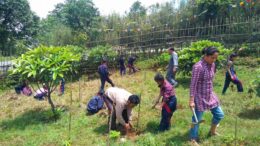
Prior to the colonial period, large areas of the lower and middle elevations, specifically in Darjeeling were covered by extensive subtropical and temperate broad-leaf forests that formed a continuous ecological network across the hills. During British rule, the landscape underwent a profound transformation as forests were cleared to establish tea plantations, settlements, roads, and other infrastructure. These changes shaped the economic and cultural identity of the region and continue to influence the landscape today. However, they also resulted in the fragmentation and loss of vast tracts of native forest ecosystems.

What remain today are often isolated patches of native vegetation embedded within tea estates, agricultural lands, village forests, and human settlements. Though fragmented, these remnants represent some of the last surviving examples of ecosystems that once dominated the Darjeeling Himalaya.

Restoring ecosystems is not only about conservation; it is also about people.

Healthy native forests support a wide range of non-timber forest products (NTFPs) that contribute to rural livelihoods and cultural traditions. Seasonal collection of fiddle-head ferns (ningro), wild mushrooms, bamboo products, wild edible fruits, fodder resources, and medicinal and aromatic plants has long formed an important part of life in the Darjeeling-Sikkim Himalaya. These resources provide food, nutrition, traditional medicines, and supplementary income for many households while helping preserve traditional ecological knowledge passed down through generations.

Siliguri District and The Hollowing Out of Darjeeling – Beware

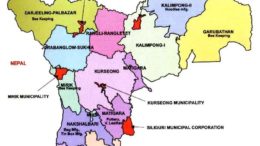
The Terai is not a foreign appendage attached to the hills; it is part of the same human geography. Phansidewa and Bagdogra have substantial Nepali-speaking populations whose families have lived there for  generations, and the tea-garden workforce of the Terai is overwhelmingly Adivasi and Gorkha. Their political voice in district affairs has always run through hill institutions, hill parties and hill networks. Cutting off these blocks administratively is not a neutral change. It is a demographic rearrangement of political power.


Trapped in the Feed: How Social Media Algorithms Influence Young Indians’ Thoughts and Feelings

Across India, college students and young content producers find themselves caught in an infinite loop of swipes, likes, and comparisons. This phenomenon is driven by a strong but mostly invisible force: algorithmic curation, which determines what appears on our screens and what disappears silently.

As social media networks become vital to how young Indians communicate, study, and express themselves, researchers and mental health specialists are posing an important question: What does this continuous algorithmic filtering do to young minds?


Gorkha Hill Transport Composite Complex – A betrayal

During the tenure of Subhash Ghisingh and under the Darjeeling Gorkha Hill Council (DGHC), a vision was laid out to create a Gorkha Hill Transport Composite Complex in Darjeeling More, Siliguri – a project inspired by the Sikkim Nationalised Transport Composite Complex.

The plan was to build a unified transport hub that would serve as a lifeline for the hill population, designed to benefit both local passengers and hill taxi drivers across Darjeeling.

That vision has been betrayed today


Mahakal, The Mandir I Knew

For me, being Hindu was never about rigid codes or centralized doctrines. Dara Mandir became a shared identity, a Darjeelingey or “Gorkha” way of being that embraced diversity and coexistence. I’ve met practicing Christians in Chowrasta who hold Dara Mandir in reverence, not out of religious obligation but out of respect for its place in our collective memory.


The hills deserve better

The people of the hills are yearning for genuine change, and the only weapon they possess is their vote. It is therefore imperative that we do not fall prey to the propaganda machinery that thrives on rhetoric and raw emotions. We must decide wisely, lest we spend another five years trapped in regret, lamenting unfulfilled promises and watching our backyards crumble further.


Lest We Forget – The Teesta Disaster, 4 October 2023

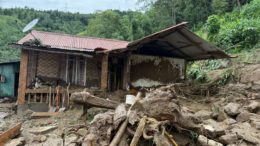
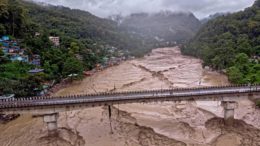
The October 2023 Teesta Floods and the acronym GLOF are not going to be easily erased from our memories, especially when it rains in the first week of October. Neither is the scarring of the landscape and the river flowing alongside houses, roads and highways going to heal overnight, considering very little was done for the rehabilitation of the landscape. What has faded is the much needed national and mainstream media focus on the issue and dialogue for rehabilitation and resilience building. As a region we have to ask the question, are we left to live with the impacts of the Teesta Disaster 2023 or are we going to learn from it and build back better?


Dashain Aayo

The sky is blue. The sun glows. Thin clouds scatter like kite tails unraveling in the wind. Somewhere, the voice of the weatherman drifts in. Dashain aayo.