
Beyond Planting Trees : Restoring Native Forest and Freshwater Ecosystems In Darjeeling Himalaya Dr. Shailendra Dewan of Singell argues why restoring native ecology is important
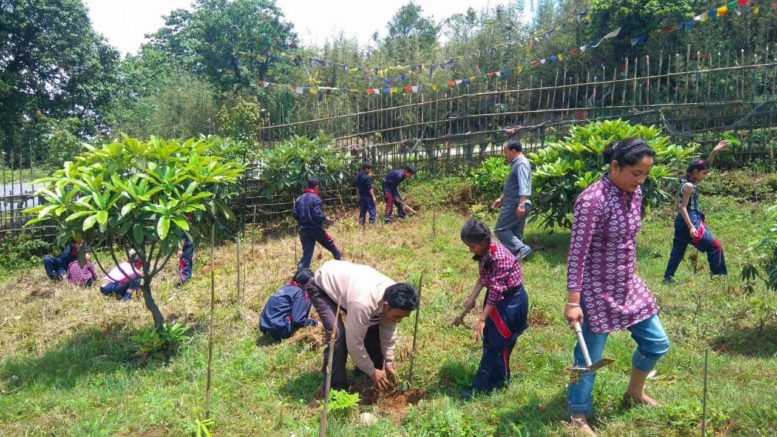
Every year, World Environment Day reminds us of our collective responsibility towards the environment. Across the globe, tree-planting campaigns have become a symbol of environmental action, helping to raise awareness about conservation and climate change. While these efforts are important, the ecological future of the Darjeeling Himalaya depends on something broader and more enduring: the restoration of native forest and freshwater ecosystems.
The Darjeeling region forms part of the Eastern Himalaya, one of the world’s most significant biodiversity hot-spots. Its forests, rivers, streams, wetlands, and springs support an extraordinary diversity of life while providing essential ecosystem services that sustain local communities. Yet many of these ecosystems have been altered, fragmented, or degraded over time, reducing their ability to support biodiversity and maintain critical ecological functions.
A Landscape Shaped by History
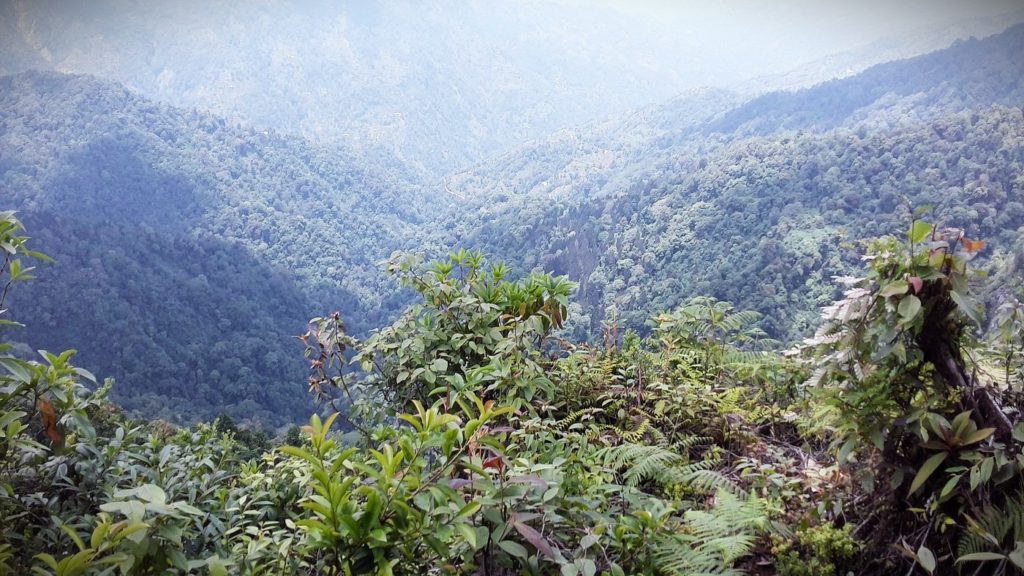
The landscape of Darjeeling that we see today is very different from what existed two centuries ago. Our understanding of the region’s original ecological character comes not only from the remnant native forest patches that still survive across the landscape but also from the accounts of early naturalists and explorers who documented the region’s remarkable biodiversity.
Among the most notable of these was Sir Joseph Dalton Hooker, whose Himalayan Journals provide vivid descriptions of the forests, vegetation, and plant diversity of the Eastern Himalaya during the mid-nineteenth century. Together, these historical accounts and the surviving forest remnants offer valuable insights into ecosystems that once extended across much of the region.
In his own word
“At about 1000 feet above Punkabaree, the vegetation is very rich, and appears all the more so from the many turnings of the road, affording glorious prospects of the foreshortened tropical forests. The prevalent timber is gigantic, and scaled by climbing Leguminosae, as Bauhinias and Robinias, which sometimes sheath the trunks, or span the forest with huge cables, joining tree to tree. Their trunks are also clothed with parasitical Orchids, and still more beautifully with Pothos (Scindapsus), Peppers, Gnetum, Vines, Convolvulus, and Bignoniæ. The beauty of the drapery of the Pothos-leaves is pre-eminent, whether for the graceful folds the foliage assumes, or for the liveliness of its colour” -Source The Himalayan Journal by JD Hooker
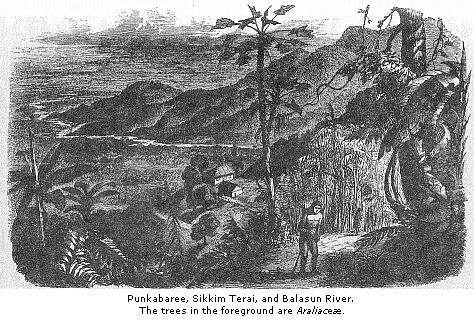
Prior to the colonial period, large areas of the lower and middle elevations, specifically in Darjeeling were covered by extensive subtropical and temperate broad-leaf forests that formed a continuous ecological network across the hills. During British rule, the landscape underwent a profound transformation as forests were cleared to establish tea plantations, settlements, roads, and other infrastructure. These changes shaped the economic and cultural identity of the region and continue to influence the landscape today. However, they also resulted in the fragmentation and loss of vast tracts of native forest ecosystems.
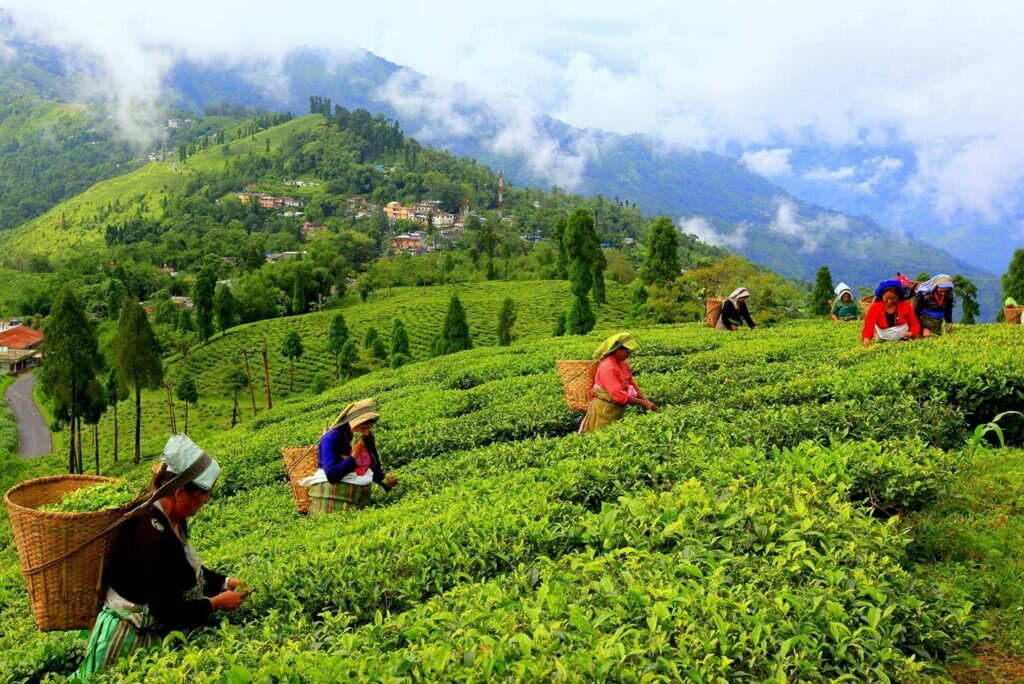
What remain today are often isolated patches of native vegetation embedded within tea estates, agricultural lands, village forests, and human settlements. Though fragmented, these remnants represent some of the last surviving examples of ecosystems that once dominated the Darjeeling Himalaya.
Why Native Ecosystems Matter
These remaining forests are far more than green spaces. They are complex living systems that support a remarkable diversity of plants, birds, butterflies, mammals, fungi, and microorganisms. Many species depend on these habitats for survival, while ecological interactions among pollinators, seed dispersers, decomposers, and plants maintain the functioning of the ecosystem. Several threatened species like Rufous Necked Hornbill, Himalayan Newt Salamander, Kaiser I Hind Butterflies exist in this region
Native forests also provide essential ecosystem services. They regulate water flows, recharge springs, stabilize mountain slopes, reduce soil erosion, store carbon, and help buffer communities against the impacts of climate change. Many of the remaining forest patches function as ecological corridors, allowing wildlife to move between habitats in an increasingly fragmented landscape.
The springs, streams, wetlands, and rivers associated with these forests are equally important. Together, forests and freshwater ecosystems form the ecological foundation upon which biodiversity, water security, and human well-being depend.
Restoration is More Than Planting Trees
Protecting these remaining ecosystems is essential, but protection alone is no longer sufficient. Many forest patches have become degraded due to habitat fragmentation, invasive species, unsustainable land-use practices, and the cumulative pressures of climate change.
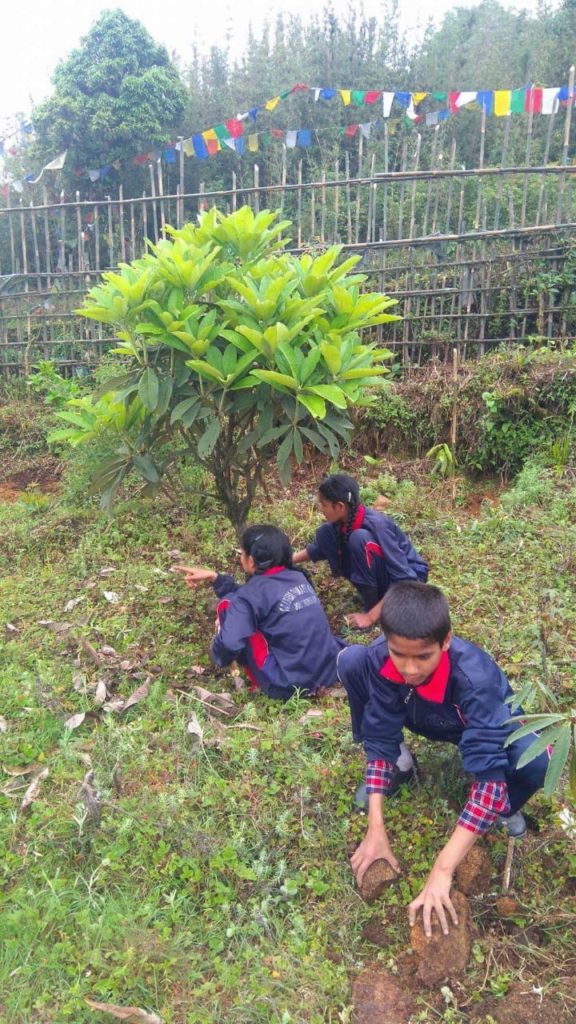
Ecological restoration is often misunderstood as simply planting trees. In reality, restoration is about recovering entire ecosystems and the ecological processes that sustain them. A native forest is much more than a collection of trees. It is a living network of plants, animals, fungi, microorganisms, soils, and water systems that interact over time to create resilient and functioning ecosystems.
Restoration therefore involves protecting remnant forests, encouraging natural regeneration, reconnecting fragmented habitats, restoring native vegetation, controlling invasive species, and ensuring that ecological processes such as pollination, seed dispersal, nutrient cycling, and soil formation continue to function.
Importantly, restoration is not about recreating the past exactly as it was. Rather, it is about recovering ecological functions and reconnecting the remnants of native ecosystems that still persist across the landscape. By restoring these ecological connections, we can enhance biodiversity, strengthen water security, and build resilience in a rapidly changing world.
Reconnecting Forests and Freshwaters
The springs, streams, wetlands, and rivers of the Himalaya are ecological lifelines that connect mountains, forests, and communities. For generations, springs have served as primary sources of drinking water for villages and towns, while rivers and streams have supported agriculture, livelihoods, and biodiversity.
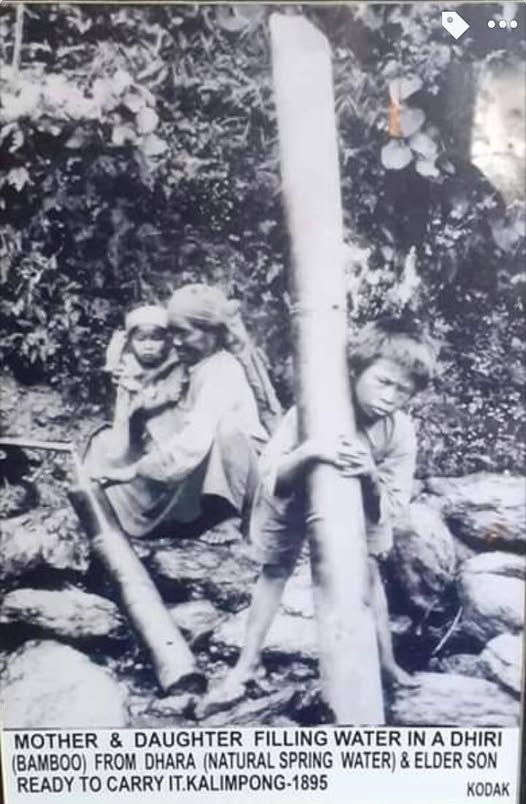
Pic by: Kodak Studio, Kalimpong
Forests and freshwater ecosystems are deeply interconnected. Healthy forests capture rainfall, enhance groundwater recharge, regulate runoff, and maintain the catchments that feed springs and streams. When forests are degraded, freshwater systems often become vulnerable as well.
Protecting spring recharge zones, restoring riparian vegetation along streams, rehabilitating degraded wetlands, and conserving river corridors are therefore integral components of ecosystem restoration. Such actions not only enhance biodiversity but also strengthen water security, reduce erosion and landslide risks, and improve resilience to climate variability.
Restoring freshwater ecosystems is particularly important in mountain regions where communities are increasingly facing seasonal water shortages and changing rainfall patterns. Healthy forests and healthy watersheds together form the foundation of long-term ecological and social resilience.
Restoration and Sustainable Livelihoods
Restoring ecosystems is not only about conservation; it is also about people.
Healthy native forests support a wide range of non-timber forest products (NTFPs) that contribute to rural livelihoods and cultural traditions. Seasonal collection of fiddle-head ferns (ningro), wild mushrooms, bamboo products, wild edible fruits, fodder resources, and medicinal and aromatic plants has long formed an important part of life in the Darjeeling-Sikkim Himalaya. These resources provide food, nutrition, traditional medicines, and supplementary income for many households while helping preserve traditional ecological knowledge passed down through generations.
Restoring native forest ecosystems can improve the availability and sustainability of these resources by enhancing habitat quality and supporting native plant diversity. When managed sustainably, these products can contribute to local economies while creating incentives for conservation.
Restoration can also create new opportunities through nature-based tourism. Forest trails, bird-watching routes, butterfly walks, nature interpretation centres, spring tourism, and community-managed ecotourism initiatives can generate income while promoting environmental stewardship. The region’s exceptional biodiversity offers unique opportunities for wildlife observation, photography, environmental education, and citizen science activities that attract visitors from across India and beyond.
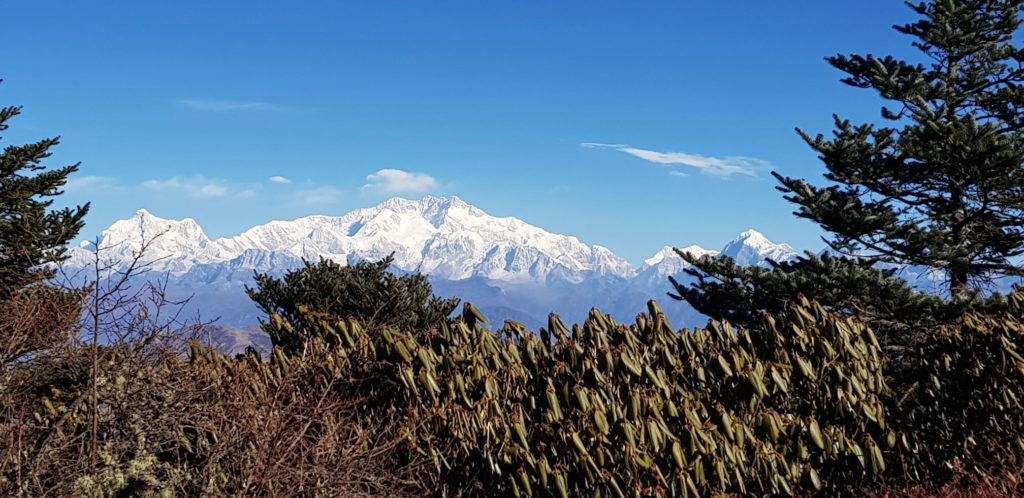
As native biodiversity recovers, it can also create opportunities for a new generation of local entrepreneurs. Young people can develop enterprises linked to ecotourism, birdwatching and butterfly guiding, homestays, biodiversity documentation, native plant nurseries, sustainable NTFP value chains, environmental education, and ecosystem restoration services. Such opportunities can diversify rural economies and generate meaningful employment rooted in local landscapes and cultures.
In a region where many young people migrate outside in search of work, nature-based enterprises can offer viable livelihood alternatives closer to home. Ecosystem restoration can therefore help create conditions that encourage some youth to return, invest their skills locally, and build businesses around the region’s unique natural heritage. In this way, restoration becomes not only an investment in biodiversity and water security but also an investment in people, livelihoods, and the future of mountain communities.
Healthy ecosystems also support agriculture through pollination services, improve water availability, reduce disaster risks, enhance climate resilience, and strengthen local economies. In mountain landscapes where people and nature are closely interconnected, ecosystem restoration is an investment in both ecological and economic well-being.
A Shared Responsibility for the Future
The future of conservation in the Darjeeling-Sikkim Himalaya will depend not only on what happens within protected areas but also on how we manage the wider landscape where people live, farm, and work. Tea estates, village communities, educational institutions, local governments, civil society organizations, and individual landowners all have important roles to play in restoring ecological connectivity across the region.
As we mark World Environment Day, it is worth remembering that the ultimate goal is not simply to increase tree cover. It is to restore healthy, connected, and resilient ecosystems that can sustain both biodiversity and human well-being.
The forests, springs, streams, and rivers of Darjeeling and Sikkim are part of a shared natural heritage. Protecting and restoring these ecosystems today will help ensure that future generations inherit landscapes that remain rich in biodiversity, secure in water resources, economically vibrant, and resilient in the face of environmental change.
The future of Darjeeling and Sikkim depends not only on conserving the remnants of its natural heritage but also on restoring the ecological connections that once linked forests, springs, streams, and rivers across the landscape. By investing in ecosystem restoration today, we can build landscapes that support biodiversity, strengthen livelihoods, secure water resources, create opportunities for future generations, and sustain both people and nature for years to come

About the author: Dr. Sailendra Dewan is a research associate with the Ashoka Trust for Research in Ecology and the Environment (ATREE). He is originally from Singell Tea Estate in Kurseong. His research pursuits are centered around macro-ecology, bio-geography, and community ecology of fauna, focusing on insects in mountain ecosystems. He currently involved in establishing a comprehensive and long-term monitoring program for butterflies alongside investigating the effects of climate change and habitat degradation in the Indian Himalayan Region.




Be the first to comment on "Beyond Planting Trees: Restoring Native Forest and Freshwater Ecosystems In Darjeeling Himalaya"