
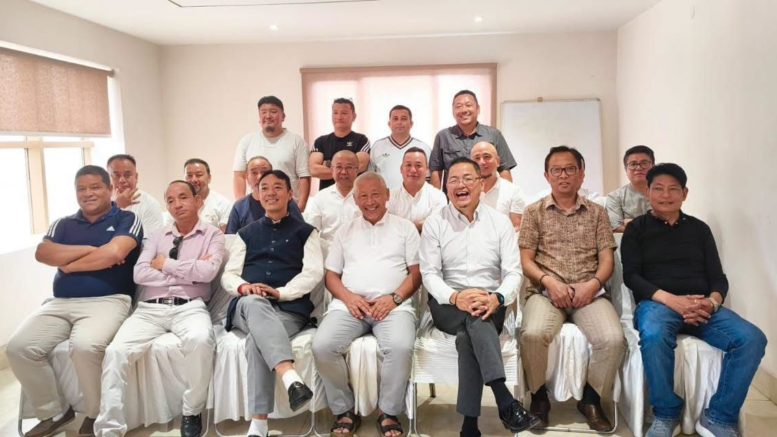
1986 to 2026: A Common Citizen’s Plea for Darjeeling by Mohan Raj Thakuri explores how common citizens have been impacted due to the repeated Gorkhaland Andolan. Despite repeated deceit by opportunistic politicians, the aspiration continues to burn bright among common citizens.
I was only eight years old in 1986 when the weight of our identity first spilled onto our hill terrain. At that age, you don’t really understand the pulse of power, the politics of Delhi, or the complicated legal language of our country’s Constitution. You just remember how it felt to be a school going child in a home and neighborhood that was constantly on edge. I still remember the sudden curfews (144 Dhara legeko cha) , heavy silence that would fall over our small hamlet known as Ghoompahar, the moment a bandh was announced. I remember the closed school gates, shops , the empty playgrounds, roads , and the quiet, worried conversations my parents had in whispers around the kitchen fire while the tea grew cold.
Most of all, I remember the sound of thousands of footsteps marching through the thick mist past our window. It was a rhythmic, unfamiliar thundering sound that shook the wooden floors of our old houses and embedded itself deep into my childhood memories .
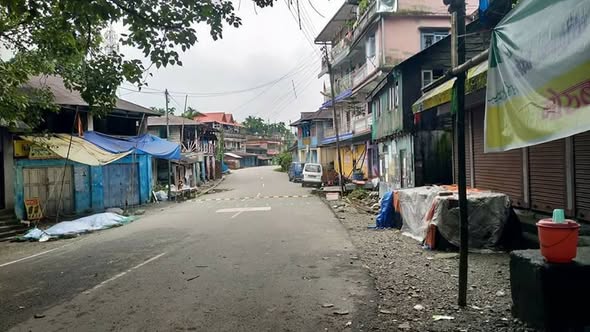
Growing up in Darjeeling, Kalimpong, Kurseong , Mirik or the hills means inheriting a dream that is much older than you are. It’s a beautiful but heavy legacy to carry. I am not a politician, and I don’t claim to be an expert or some highly educated scholar who debates our community’s future on television. I am just an ordinary, apolitical citizen who deeply loves this place , the soil, the community, and the people. Today, I am writing this because a deep sense of concern, mixed with a fragile ray of hope, inspired me to express out. I am praying for something positive, genuine, and lasting for the place I belong to.
The Power and Aura of a Name
Like many of you, I was scrolling through my phone recently when I came across the news updates capturing a significant moment from the state assembly’s Budget Session. Watching West Bengal Governor R.N. Ravi officially use the phrase “long drawn Gorkhaland issue” during his address stopped me in my tracks.
It hit me like an emotional wave. For decades, the administrative machinery in Kolkata carefully avoided that word. They treated it like a taboo, an illegal utterance. They preferred safe, diluted terms like “the hill problem”, “regional grievances”, or “administrative inconveniences”, as if we were just a minor headache to be dealt with through temporary financial packages. To see the current Newly formed state government under West Bengal Chief Minister Suvendu Adhikari explicitly lay out this issue by its true name from the floor of the Assembly is a massive, historic and welcoming shift. It feels like a quiet validation of the pain, the tears, and the sacrifices our families have made for generations.
But having said that, as ordinary people who have watched the seasons change and promises fade, we have also learned the hard way never to mistake a shift in political vocabulary for an actual shift in our destiny. A speech in a beautiful assembly hall is just air until it is forged into ironclad, unshakeable constitutional steel.
Identity Beyond Boundaries
To every single one of us, the word Gorkhaland is not just a collection of letters, nor is it merely a boundary line drawn on a political map. It is an emotional chord that strikes deep in our chests the moment it is spoken aloud. It connects us instantly across generations, across villages, and across rivers.
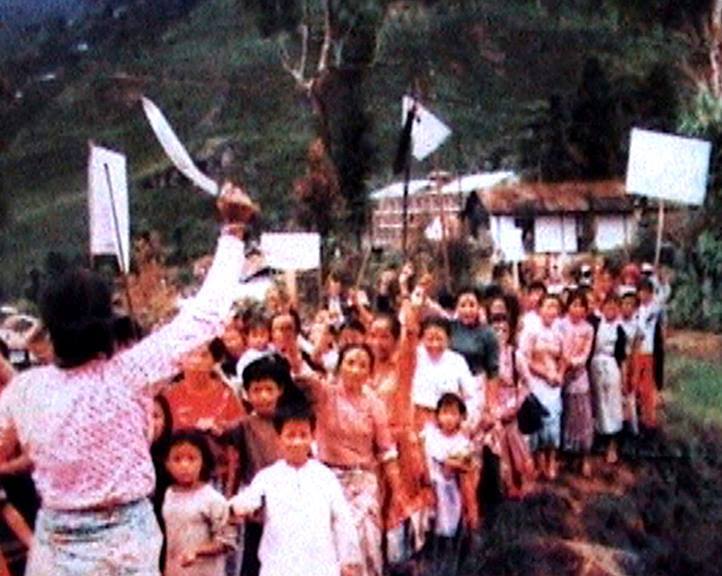
Yet, as we stand at this political crossroads, we must also remind ourselves of a much deeper, unshakeable truth that sits quietly beneath all our struggles : We are Gorkha and Proud to be Indian, with or without Gorkhaland.
Our grand history, our rich cultural heritage, our language, and our core identity do not rely solely on the name of a geographical place to exist. We were Gorkhas living in India long before these administrative lines were debated, and we will remain Gorkhas forever. Our worth is inherent; it is written in our blood, our traditions, and our contributions to this nation. But yes, while our identity cannot be erased by any government, we firmly aspire for Gorkhaland because it remains our preferred, definitive choice for a permanent political solution, a constitutional shield to protect and give a secure home to who we already are.
The Sacred Debt
We cannot talk about these aspirations without talking about the people who never made it back home. Our history isn’t just a timeline of political negotiations; it’s a reality paid for by the ultimate sacrifices of our own people. The initial fire of 1986-1988 claimed over twelve hundred brave lives.
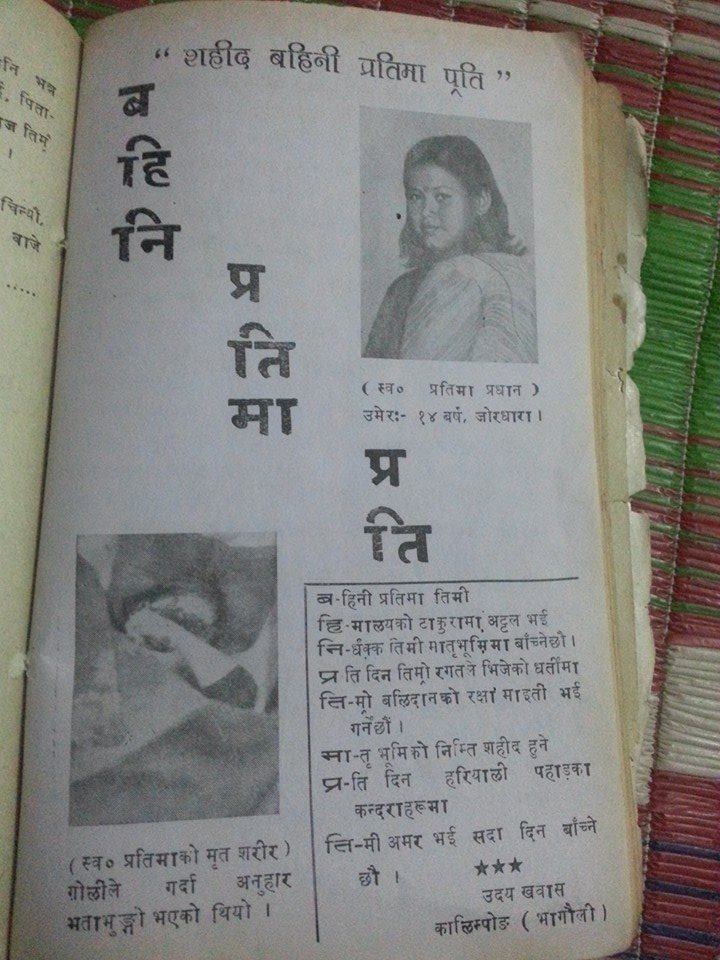
These were ordinary citizens , fathers, brothers, mothers, and young students , whose lives were cut short, leaving behind empty chairs around kitchen fires all over the hills. And the spirit of defiance didn’t just disappear with that era. Decades later, the embers flared again. We watched a new generation step into the streets during the agitations of 2007, and most poignantly, during the exhausting 104-day shutdown of 2017. Once again, young boys and girls faced bullets, and blood stained our roads from Hill to Terai and Dooars.
The Sahid Diwas we observe , The Sahid Smarak and monuments scattered across our region are not just concrete structures to be cleaned , offer garland or bouquet on a particular day , once in a year . They are the resting places of an unfulfilled promise. Our martyrs did not lay down their lives for a minor administrative upgrade, a temporary financial package, or a fancy government car for a local leader. They sacrificed their today’s so that our children could inherit a secure, dignified tomorrow. Achieving a definitive, permanent political solution within the framework of the Indian Constitution is the only true tribute we can offer to their memory. Every time our leadership settles for a toothless, compromised arrangement, it dilutes the weight of that collective sacrifice. A lasting, unshakeable constitutional shield is not just a political demand; it is a sacred debt we owe to every single soul that returned to this earth in the name of our identity.
Looking Bluntly at Our Leadership
But if we are going to demand absolute administrative, legislative, and constitutional protections from the central and state governments, we must first have the courage to look at our own shattered leadership. The most tragic part of our history isn’t just how the outside world treated us; it is how easily we have allowed ourselves to be divided from within. Every single time our collective movement reaches a peak, when the entire population stands united as one heartbeat, our leadership seems to fracture. We have watched a heartbreaking cycle where leaders rise on the backs of ordinary citizens’ sacrifices, only to split into different factions, launch new political parties with new acronyms, and point fingers at one another the moment a seat of power, a financial package, or a VIP beacon car is offered.
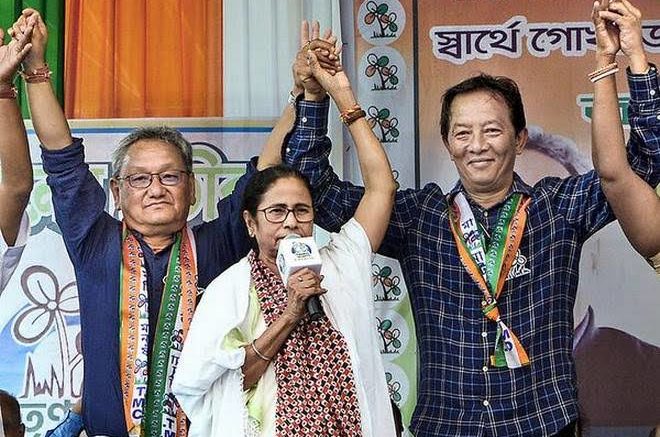
The outside world finds it incredibly easy to dismiss us because we speak in ten different, conflicting voices. Our leaders must declare a truce on their personal ambitions and political survival tactics. They need to sit together in one room, lock the door, leave their egos and party flags outside, and create a single, unified front. If they cannot find the grace to unite for the sake of the very soil that gave them birth, they have no right to ask for our respect, our votes, or our faith.
The Trap of Hero Worship
We also need to talk about our own responsibility as common citizens. We constantly boast about our high literacy rates, our premier schools, and how educated our society is. But when it comes to local politics, we often park our collective intellect at the door and let raw emotion completely override our common sense. The moment a leader stands on a stage at Chowrasta, taps the microphone, and delivers a fiery, emotionally charged speech, we swallow everything told to us without asking a single practical question. We turn ordinary human beings into untouchable heroes, deifying them until they believe they are above accountability.
This dangerous tendency brings to my mind a profound warning by Dr. B.R. Ambedkar. On November 25, 1949, during his final address to the Constituent Assembly right before the Indian Constitution was adopted, he cautioned the nation about the psychology of political devotion. He famously stated:
“Bhakti in religion may be a road to the salvation of the soul. But in politics, Bhakti or hero-worship is a sure road to degradation and to eventual dictatorship.”
For decades in the hills, we have proven his words right. Every time we turn a politician into an untouchable idol, we surrender our own power. We stop being an aware, educated society and turn into a compliant crowd. A truly responsible citizen must start asking the hard, uncomfortable questions. Instead of just clapping and shouting slogans, we should be demanding the fine print. We need to ask our leaders: What is the actual, legal roadmap? Under which article of the Indian Constitution will this permanent solution exist? What are the explicit legislative powers? How will this solution protect the land rights, the pattas, of our tea garden workers and forest dwellers who have poured their sweat and blood into this soil for two centuries without owning a single inch of the land they live on? The day we start questioning our leaders instead of blindly Hero-worshiping them is the day our movement becomes truly powerful.
Blueprints Over Slogans and Columns
A modern political struggle in India cannot be won by emotional street agitations alone. It must be argued, clause by clause, in the halls of Parliament and before constitutional experts with flawless logic, historical data, and legal acumen. This is where our intellectuals – our teachers, professors, retired bureaucrats, researchers, and eminent writers and journalists have historically failed the common man by remaining on the comfortable sidelines of being a silent critique or columnists.
We desperately need our finest minds to step into the arena. We cannot leave the drafting of our children’s future solely to career politicians who often cannot see past the next election cycle. We need our educated elite to come forward with their in-depth analytics and research-backed credentials. We need them to draft the definitive blueprints of what our aspirations actually look like on paper. They need to design sustainable economic models for our hills, create policies that protect our fragile, landslide-prone Himalayan ecology, and formulate the exact legal frameworks that will ensure whatever structure we receive can never be starved of funds or dissolved by the changing whims of a future cabinet in Kolkata. We must match the beautiful, raw emotion of the common citizen with the cold, precise intellect of a thoroughly prepared society.
A Lasting Justice
The current balanced political alignment offers a rare, historic window of opportunity. But as a community, we must refuse to be bought off with the crumbs of the past. We have lived through the experiments of the Darjeeling Gorkha Hill Council and the Gorkhaland Territorial Administration frail, administrative bodies that served as nothing more than temporary bandages on a deep, historical wound. We do not want another compromise designed to buy temporary peace; we want a constitutional guarantee designed to deliver permanent justice.
The eight-year-old child who watched the hills shut down in a blur of fear and hope is an adult today, writing these words with a heart that refuses to become cynical. We are a generation that is deeply, profoundly tired. We are tired of the instability, the shattered academic calendars, the broken local economies, and the heartbreaking sight of our bright, educated youth being forced to migrate to distant cities like Delhi, Bangalore, or Mumbai or overseas just to find a basic livelihood. We love our home too much to watch it suffer in an endless loop of unfulfilled dreams.
Let us pray that our leaders find the enlightenment to unite, that we as citizens find the awareness to stay responsible, and that our finest intellectual minds guide our path. It is time for the mist rising over the Kanchenjunga to finally clear up, bringing with it the warmth of a dignified, permanent peace…Rest will follow.



Be the first to comment on "1986 to 2026: A Common Citizen’s Plea for Darjeeling"